
Custody is a promise, not a feature
When you hold crypto for your own company, a mistake is your problem. When you hold it for thousands of users, a mistake is everyone's problem, and a regulator's question. An exchange wallet is the difference between storing funds and being able to account for them, user by user, at any moment.
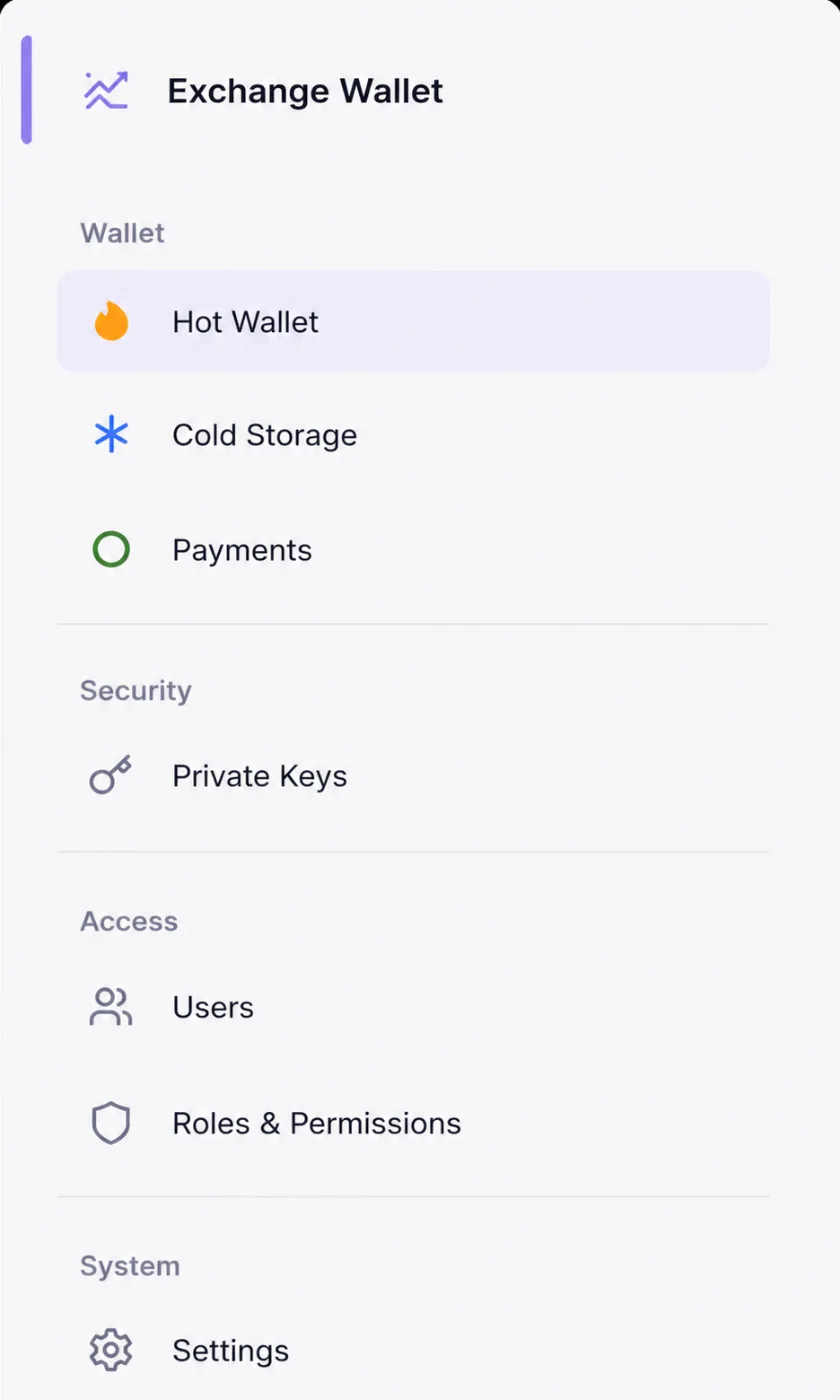
That is why the exchange wallet is built around two ideas the rest of Guveno borrows from: omnibus custody with per-user attribution, and a hot/cold split you can actually operate.
One wallet, thousands of balances
Under the hood you do not want a separate on-chain wallet for every customer: fees and key management would eat you alive. The exchange wallet keeps funds in pooled hot and cold accounts, while crediting each user internally. Deposits land, get attributed to the right user, and reconcile against the on-chain total automatically.
Your users see their own balance. You see one ledger that always sums to what is actually on-chain.

A hot/cold split you can defend
Keep a small, capped float in the hot account to serve withdrawals instantly, and sweep the rest to cold on a schedule. Velocity limits and quorum approvals guard the boundary, so a compromised hot key can never reach the treasury.
The point is not to make withdrawals slow. It is to make the worst case small.

Prove it, do not promise it
"Funds are safe" means nothing without a trail. Every internal credit, sweep and withdrawal is logged and exportable, so you can produce a proof-of-reserves view or answer a support ticket with the same data. The audit trail is plain enough for a compliance officer and complete enough for an engineer.
Who holds the keys?
In the end, an exchange lives or dies on key custody. Guveno lets you decide where the keys live and who has to come together to use them: multi-party approvals, hardware-backed signing, and a clear hand-off when team members change. The keys are the business; treat them like it.
Get that right and the rest of the exchange wallet is just plumbing that finally works.